  • 143 articles

TouchGFX 4.24.1 now available with latest updates and fixes

TouchGFX 4.24.1 now available with latest updates and fixes

We are pleased to announce the release of TouchGFX 4.24.1, which includes bug fixes and improvements to enhance your development experience. TouchGFX Designer improvementsEnhanced project updater: The project updater now seamlessly updates STM32CubeIDE projects created with STM32CubeMX v6.12.0 and above. This enhancement ensures compatibility with the latest STM32CubeMX updates, providing a better experience for our users. We are pleased to have addressed the specific issues mentioned in the community threads here and here. Optimized 'Images' tab: We have refined the 'Images' tab to eliminate warnings when using an 8 bits per pixel framebuffer, particularly in the compression column. VectorFontRenderer enhancement: We have resolved a minor error in the VectorFontRenderer code when using a 1 bit per pixel framebuffer, ensuring more reliable and accurate font rendering.  TouchGFX Core enhancementsImproved font converter: The font converter now efficiently handles fonts with more than 255 kerning pairs per character by stopping at 255 pairs and providing a helpful warning, effectively resolving the mentioned issue here. This update ensures stability and a better user experience. Warning for PNG image handling: 64-bit PNG format images are not supported. If you’re using them in your project, a warning is issued to keep you informed that it is not supported. Refined Thai glyph rendering: We have made a small yet significant improvement in the rendering of the Thai glyph 0x0E33 when using unmapped fonts, ensuring more accurate and visually pleasing text display.  You can download TouchGFX 4.24.1 here (release date: September 19, 2024). We hope you enjoy this new version, and if you notice any issues with TouchGFX 4.24.1, please let us know in the comments!First published on Oct 3, 2024

Related products:STM32 software tools
Flexible, space-saving class-D amplifier for in-car audio adds automotive-optimized diagnostics

Flexible, space-saving class-D amplifier for in-car audio adds automotive-optimized diagnostics

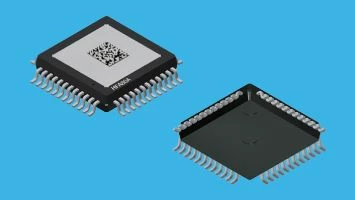
The HFA80A automotive-grade analog-input class-D audio amplifier combines high efficiency, small size, and a low bill of materials, with load diagnostics optimized for automotive and native electromagnetic compatibility (EMC). With its feedback-before-filter topology and 2MHz nominal PWM frequency, the HFA80A lets designers optimize the output filter for the targeted performance and achieve a compact outline with small component values. Spread-spectrum operation simplifies meeting the mandatory CISPR 25 specification, with no additional EMC-specific filtering required. The amplifier delivers clear and powerful listening experiences, driving up to 4x 49W into 2Ω speakers at 14.4V and with typical harmonic distortion (THD) specified at 0.015% (1W/4Ω). Pure sound is assured, with low output noise and crosstalk as well as 80dB power supply rejection specified at 1W/1kHz with 4Ω loads. Flat frequency response up to 40kHz ensures generous bandwidth for high-resolution audio, which designers can extend to 80kHz by optimizing the filter. In addition, the HFA80A can handle performance-centric applications such as noise cancelling thanks to low latency by design. The automotive-specific diagnostics is based on a specially conceived noise-immune algorithm capable of detecting anomalous load conditions and variations. Features include independent DC and AC load detection for each channel, detection of short-circuit on startup, and overcurrent protection with configurable thresholds. Further diagnostic checks include input-voltage DC-offset detection, output-current offset detection, and thermal protection with a choice of four different thermal warnings. A dedicated, configurable pin signals the host microcontroller when new diagnostic information is available, which simplifies host communications and relieves CPU workload. An I2C-bus interface provides access to the device features and diagnostic data, and a backup mode lets the amplifier continue operating even if I2C control is lost. In addition, the HFA80A features a digital admittance meter (DAM) that eases development by helping engineers check the connected speaker characteristics without external measurement tools or sensors. The HFA80A is available now in a compact 7mm x 7mm LQFP48L thermally enhanced package with exposed pads, from $4.80 for orders of 1000 pieces. Additional resourcesHFA80A product overview HFA80A data briefFirst published on Sep 23, 2024

Related products:Other hardware and tools
ST launches highly-integrated power-management IC for its latest microprocessors

ST launches highly-integrated power-management IC for its latest microprocessors

The STPMIC25 power-management IC for STM32MP2 microprocessors is now available, with 16 channels to supply all the MPU power rails as well as system peripherals in one convenient package. Completing the hardware design requires only a small number of external components to provide filtering and stabilization and the STEVAL-PMIC25V1 evaluation board is available now to start development immediately. The IC contains seven DC/DC buck converters and eight low-dropout (LDO) regulators, with an additional LDO to provide the reference voltage (Vref) for system DDR3 and DDR4 DRAMs. Among the eight LDOs is a dedicated 3.3V channel to supply USB High-speed and Type-C PHY ICs. There are also general-purpose LDOs that can be assigned to power circuitry such as memory card interfaces and Ethernet ports.  The buck converters are optimized to power the MPU’s CPU, core circuitry, GPU, I/O and analog domains, with additional channels for DDR RAM supply and a general-purpose auxiliary output. The converters are designed with fast transient response and low ripple across a wide range of operating conditions, to meet specific demands of the MPU’s power domains. All converters use adaptive constant on-time control for high efficiency, with spread-spectrum frequency modulation and phase-shifted switching with an advanced synchronization technique to minimize EMI. In addition, each converter can operate in high-power or low-power mode, controlled by the application software, allowing the host system to enhance energy savings by minimizing converter quiescent currents. All bucks and LDOs can be enabled and disabled independently. With non-volatile memory (NVM) on-chip and an I2C interface, the STPMIC25 allows flexibility to support a wide range of uses. Settings such as output voltages and power-up and power-down sequencing can be programmed or configured dynamically through software. Safety features including thermal protection and overcurrent protection for each output are built in. The STPMIC25 is in production now, packaged in a 6.5mm x 6.5mm 56-lead WFQFN just 0.9mm high, from $3.38 for orders of 1000 pieces. The STEVAL-PMIC25V1 is available in the eStore or through distributors. Additional resourcesSTPMIC25 datasheet On-demand webinar: Delve into the world of high-efficiency DC-DC conversion STPMIC1x and STPMIC25x product presentation STEVAL-PMIC25V1 data briefFirst published on Sep 19, 2024

Related products:STM32 products and hardware tools
High-voltage power stage with space-efficient evaluation board for smaller, tougher motor drives

High-voltage power stage with space-efficient evaluation board for smaller, tougher motor drives

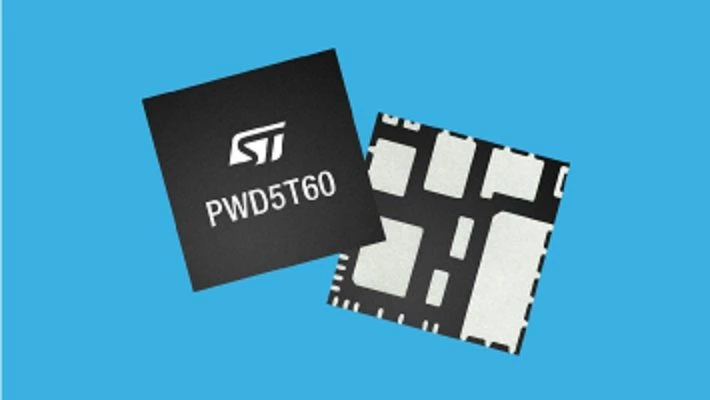
Accelerating development of compact and reliable fans and pumps built with energy-efficient motors, STMicroelectronics has introduced the PWD5T60 three-phase driver with a ready-to-use evaluation board that supports flexible control strategies. Suited to applications up to 500V, the PWD5T60 integrates a gate driver and six power MOSFETs with RDS(ON) of 1.38Ω, enabling the device to achieve an outstanding energy to area rating. Zero-drop bootstrap diodes are also built-in, requiring minimal external components to complete the circuit in only 30% of the board area of an equivalent driver built with discrete components. The propagation delays of high-side and low-side MOSFETs are closely matched, which eliminates cycle distortion and maximizes flexibility to set the operating frequency for optimum response and energy efficiency. The EVLPWD-FAN-PUMP evaluation board, released at the same time, helps developers quickly explore the value this driver can deliver in projects up to 100W. The board combines the PWD5T60 with an STM32G0 microcontroller (MCU) that can handle field-oriented control (FOC) or 6-step control of permanent magnet synchronous motors (PMSMs) and brushless DC (BLDC) motors. With configurable single or three-shunt sensing and leveraging the PWD5T60’s high feature integration to achieve a compact, circular form factor, the board is optimized for use with fans and pumps. The board also features a power-supply stage to generate 12V and 3.3V supply voltages for the application and comes with a complete AC line filter at the input. Featuring on-board bus-voltage sensing, the EVLPWD-FAN-PUMP board helps utilize the PWD5T60’s safe design that provides undervoltage lockout (UVLO) for each bootstrap section to prevent operation in dangerous or low-efficiency conditions. Engineered for robustness, the PWD5T60 also features cross-conduction prevention with interlocking and pre-programmed default deadtime to ensure failsafe protection against shoot-through currents. In addition, excellent below-ground robustness ensures faultless performance. The PWD5T60 has a smart shutdown feature that uses a comparator for fast-acting overcurrent prevention. The output turns off immediately when a fault is detected, while the subsequent output-disable duration is programmed by connecting a capacitor and optional pull-up resistor to a dedicated pin. The turnoff response is unaffected by these components, letting product developers optimize the duration to allow time for faults to clear while always ensuring instant turn-off. The driver has a wide input supply voltage range from 9V to 20V for optimum flexibility, while CMOS/TTL-compatible logic inputs down to 3.3V simplify interfacing with a host controller. The PWD5T60 is in full production and available in a compact 12mm x 12mm VFQFPN package only 0.95mm high, from $3.28 for orders of 1000 pieces.  The EVLPWD-FAN-PUMP evaluation board is available now from the eSTore, at the budgetary price of $102.00. The board delivers plug-and-play convenience leveraging FOC and 6-step control firmware in the X-CUBE-MCSDK motor-control software development kit available free of charge at st.com. Additional resourcePWD5T60 product overviewFirst published on Sep 18, 2024

Related products:Other hardware and tools
Performance boost to cost-efficient STM32C0 series

Performance boost to cost-efficient STM32C0 series

STM32 developers can now get more memory and extra features in STM32C0 microcontrollers (MCUs) to support more sophisticated functionality in resource-constrained and cost-sensitive embedded applications.Bringing up to 128Kbyte of Flash and 24Kbyte of RAM, the STM32C071 MCUs also add USB Host and crystal-less Device as well as TouchGFX support. With USB on-chip, designers can easily save at least one external clock and four decoupling capacitors to cut the bill of materials and ease PCB layout. Also, having only one power-supply pair helps to simplify the PCB design, new product designs can become slimmer, trimmer, and more competitive.STM32C0 MCUs feature the Arm® Cortex®-M0+ core and can replace legacy 8-bit or 16-bit MCUs in equipment like home appliances, simple industrial controls, power tools, and IoT devices. As a cost-effective 32-bit option, they provide more performance, memory, and peripheral integration for functions such as user-interface control, as well as other basic controls, timing, computation, and communications.Also, developers can accelerate development with STM32C0 MCUs by taking advantage of the powerful STM32 ecosystem that provides extensive tools, software packs, and evaluation hardware. And, of course, connecting with the STM32 user community. Scalability is another strong feature as the STM32C0 series shares key attributes with ST’s higher-performing STM32G0 MCUs, including the Cortex-M0+ core, peripheral IP, and most compact pinout with maximum I/O ratio. “We conceived the STM32C0 series as an affordable entry point to 32-bit embedded computing. With larger memory options and USB Host/Device on-chip, the STM32C071 line now gives more flexibility to upgrade existing applications and create new products,” said Patrick Aidoune, General Purpose MCU Division General Manager, STMicroelectronics. “Also, with full support in TouchGFX GUI software, these MCUs simplify elevating user experiences with graphics, animation, color, and touch.” Two customers for the STM32C071, Team Source Display (TSD) headquartered in Dongguan, China, and Riverdi Sp. of Gdańsk, Poland, have completed their first projects with the new STM32C071 MCUs. Both are ST Authorized Partners. TSD chose the STM32C071 to control a complete 240x240-resolution knob display module, including the knob’s 1.28-inch circular LCD and position-coding electronics. Roger L.J, TSD’s COO, comments, “The MCU is cost-efficient and easy for our developers to use, enabling us to deliver a competitively priced and transformative product for home appliances, smart-home devices, car controls, beauty equipment, and industrial controls.”  Kamil Kozłowski, co-CEO of Riverdi, describes his company’s 1.54-inch LCD module that combines high optical clarity and brightness with very low power consumption. “Our customers can integrate our new display modules easily in their own projects, benefiting from the STM32C071’s simplicity and affordability. We designed the modules to connect directly with the STM32 NUCLEO-C071RB development board, and created TouchGFX graphics demonstration projects, taking advantage of the excellent ecosystem.”The STM32C071 MCUs are in production now, priced from $0.53 in the TSSOP20 package and $0.73 in LQFP64 for orders of 1000 units. ST’s longevity program ensures STM32C0 MCUs will be available for up to 10 years from the date of purchase, to support ongoing production and field-maintenance requirements. Additional resourcesSTM32C0 product overview STM32C071 MCUs videoFirst published on Sep 17, 2024

Related products:STM32 products and hardware tools
750W motor-drive reference board in tiny outline for home and industrial equipment

750W motor-drive reference board in tiny outline for home and industrial equipment

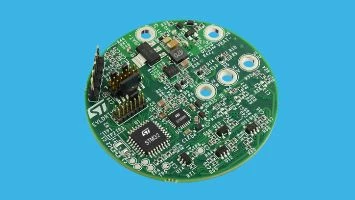
The EVLDRIVE101-HPD (High Power Density) motor-drive reference design packs a 3-phase gate driver, STM32G0 microcontroller, and 750W power stage on a circular PCB just 50mm in diameter. The board features extremely low power consumption in sleep mode, below 1uA, and its tiny outline can fit directly in equipment like hairdryers, handheld vacuums, power tools, and fans. It also fits easily into drones, robots, and drives for industrial equipment such as pumps and process-automation systems.Built with ST’s robust and compact STDRIVE101 3-phase gate driver, the reference design gives flexibility to choose the motor-control strategy, such as trapezoidal or field-oriented control (FOC), with sensored or sensorless rotor-position detection. The STDRIVE101 IC contains three-half bridges with 600 mA source/sink capability and operates from 5.5V to 75V to handle any low-voltage application. The chip integrates voltage regulation for the high-side and low-side gate drivers and configurable drain-source-voltage (Vds) monitoring protection. It also provides an external pin for choosing direct high-side and low-side gate inputs or PWM control.Developers can take advantage of the STM32G0 single-wire debug (SWD) interface to interact with the microcontroller, while support for direct firmware update allows applying bug fixes and new features.The power stage of the EVLDRIVE101-HPD reference design features STL220N6F7 60V STripFET F7 MOSFETs, which preserve efficiency with their 1,2mΩ typical Rds(on), easing plug-and-play connection of the motor. Additional features include fast-acting power-on circuitry that disconnects the power source when idle to save energy and extend operation in battery-powered applications. Protection built into the driver IC ensures system safety and efficiency, including the Vds monitoring of the power-stage MOSFETs, as well as under-voltage lockout (UVLO), overtemperature protection, and cross-conduction prevention.The EVLDRIVE101-HPD is ready to use out of the box and is available now from the eSTore, for $92.00.Additional resources EVLDRIVE101-HPD product overview EVLDRIVE101-HPD data brief First published on Jul 22, 2024

Related products:STM32 products and hardware tools
Single-zone direct-ToF sensor with extended operating temperature for industrial applications

Single-zone direct-ToF sensor with extended operating temperature for industrial applications

The new VL53L4ED single-zone Time-of-Flight (ToF) sensor has an extended operating temperature range from -40°C to 105°C. Ready for harsh environments, the VL53L4ED enhances proximity detection and ranging under high ambient light conditions in applications such as industrial tools, smart-factory equipment, robot guidance systems, outdoor lighting controls, and security systems. Expanding ST’s VL53L4 family of direct-ToF sensors, the VL53L4ED integrates a laser emitter and a single-photon avalanche-diode (SPAD) detector array in a convenient all-in-one module which ensures reliable measurement even in extreme temperature conditions. The next-generation laser provides enhanced performance in high ambient light environments and excellent short-distance ranging accuracy. In addition, the sensors embed a processor that allows power-saving autonomous operation and lowers demand for host-system resources. ST’s new ToF sensor provides high-accuracy distance measurement to objects up to 1150mm away, throughout the entire field of view and over the full extended temperature range. Special settings allow accurate distance measurement up to 800mm under strong ambient light conditions. The VL53L4ED sensor maintains distance-measurement linearity down to 1mm and supports ranging frequency up to 100Hz. Developers can take advantage of the X-CUBE-TOF1 expansion software package for the STM32Cube ecosystem to accelerate projects using the VL53L4 sensor family. Ready-to-use software includes as well the STSW-IMG034 driver that lets an interrupt command turn the VL53L4ED or VL53L4CD into an ultra-low-power proximity detector for user detection, system activation, and touchless control. In addition, the STSW-IMG039 software pack contains code examples for liquid-level monitoring. Hardware includes the X-NUCLEO-53L4A3 expansion board for the NUCLEO-F401RE microcontroller board, which eases running code examples and building applications, as well as the SATEL-VL53L4ED breakout board for prototyping. All the VL53L4 sensors are pin-compatible and offered in a 4.4mm x 2.4mm x 1mm-high LGA package. The new VL53L4ED is in production now, priced from $2.3 for 4500 pieces. Additional resourcesVL53L4ED datasheet VL53L4ED product overviewFirst published on Jul 15, 2024

Related products:Other hardware and tools
New STM32WB0 products facilitate Bluetooth® Low Energy 5.4 connectivity add-ons in embedded systems

New STM32WB0 products facilitate Bluetooth® Low Energy 5.4 connectivity add-ons in embedded systems

The new STM32WB05 and STM32WB06/07 lines enrich the first STM32WB09 line released in 2023, expanding options for developers looking for a cost-effective, entry-level wireless solution for their embedded devices. The STM32WB0 microcontrollers support Bluetooth® Low Energy 5.4, including the new periodic advertising with responses (PAwR) feature for large-scale, low-power bidirectional networks. ST is also introducing an STM32WB05xN network processor. The STM2WB0 series is an evolution of the BlueNRG-LP and BlueNRG-LPS wireless SoC series and they share the same DNA. Developers can now harness the capabilities of the STM32Cube ecosystem and use the same software development framework across the STM32WB and STM2WBA series. Project migration across the STM32WBx portfolio is thus simple and straightforward to give users all the applicative flexibility they need. The STM32CubeWB0 software package provides several examples, including example codes for the PAwR feature. The latest example of the electronic shelf labelling demonstration presented at embedded world 2024 is now available on GitHub. The new X-CUBE-WB05N expansion package brings the complete middleware and numerous examples to build Bluetooth® Low Energy 5.4 applications using STM32WB05xN. This software package will be natively compatible with STM32CubeMX as of version 1.1. An effective solution for adding wireless connectivity to existing applicationsThe STM32WB05xN network coprocessor is the most affordable STM32 device for implementing wireless connectivity in any embedded application. Just like the other products in the series, it features a +8 dBm output power and a sleep current consumption of 800 nA. It also comes with a precompiled and certified Bluetooth® Low Energy 5.4 radio stack developed and maintained by ST. The network coprocessor delivers the essential wireless performance features, including 2 Mbps data rate, coded PHY, advertising extensions, and AoA/AoD direction finding. Its SPI and UART interfaces allow for communications with the host microcontroller or microprocessor running the main application. The host MCU or MPU and the Bluetooth® Low Energy subsystem can be updated independently, which provides greater simplicity in handling device lifecycles as well as full hardware scalability and software design flexibility, depending on the host capabilities.  Development boards are available to explore STM32WB0 products, including the NUCLEO-WB09KE, which is available now from the eStore. Additional development boards will be available later this year.  Additional resourcesSTM32WB05xN datasheet STM32WB0x: Meet all the new wireless STM32WBs that will slash bills of materials everywhere!First published on Jul 14, 2024

Related products:STM32 products and hardware tools
STSPIN reference design for smart actuators combines motor control, sensing, and edge AI

STSPIN reference design for smart actuators combines motor control, sensing, and edge AI

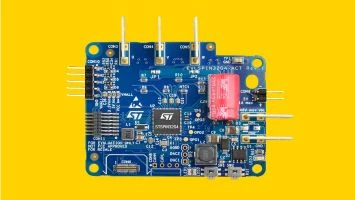
The EVLSPIN32G4-ACT edge AI motor drive reference design simplifies the creation of smart actuators. This design is based on the STSPIN32G4, a 3-phase motor driver for advanced motor control systems. It is designed to work with ST's STWIN.box (STEVAL-STWINBX1), a wireless industrial sensor node, to fast-track the development of systems that merge precise motor control with real-time environmental data analysis and IoT connectivity. The EVLSPIN32G4-ACT brings together motor control advancements with data science to enable the creation of high-performance systems. It leverages the STWIN.box's sensors to monitor actuator engines, while its rapid data-logging capabilities facilitate the development of edge AI and machine learning solutions. This allows for comprehensive system monitoring, anomaly detection, and data-driven optimization. At the core of the EVLSPIN32G4-ACT is the STSPIN32G4, which integrates a gate driver, power management, and the STM32G4 microcontroller. The board supports 3-phase motors up to 48V/5A and comes with software for connecting the sensor module, making it easier to start building applications. The STSPIN32G4 motor driver is perfect for a wide range of applications, from automation systems to robots, thanks to its compact size and low power consumption. The EVLSPIN32G4-ACT supports motors up to 250 W and includes various protection features, ensuring a minimal bill of materials and a small form factor. The design offers flexibility with multiple control methods and sensing configurations to suit diverse applications. The STWIN.box module is ready for immediate use, featuring an ultra-low power STM32U5 microcontroller, Bluetooth®, Wi-Fi, and NFC transceivers, and a suite of industrial-grade MEMS sensors. The accompanying software includes a data-logging firmware, a Bluetooth® Low Energy application, and a Python SDK, which are ideal for designing edge AI and machine learning solutions. Overall, the EVLSPIN32G4-ACT reference design enables the development of intelligent motion control devices, bringing AI to the forefront of industrial automation and smart appliance applications, enhancing smart actuation with fast, efficient data processing and decision-making capabilities. Additional resourceEVLSPIN32G4-ACT data brief First published on Jan 18, 2024 

Related products:STM32 products and hardware tools
Boost automotive power designs with new STPOWER MDmesh DM9 super-junction silicon MOSFETs

Boost automotive power designs with new STPOWER MDmesh DM9 super-junction silicon MOSFETs

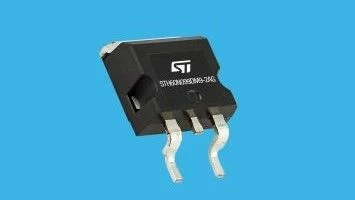
STPOWER MDmesh DM9 AG automotive-grade 600V/650V super-junction MOSFETs deliver high efficiency and ruggedness for on-board chargers and DC/DC converters in both hard- and soft-switching topologies.  The standout feature of the MDmesh DM9 AG series is its RDS(on) per die area coupled with a minimal gate charge. This combination leads to lower energy losses and superior switching performance, setting a new benchmark figure of merit. The latest technology in the series ensures a tighter gate-source threshold voltage (VGS(th)) spread, which sharpens the switching capabilities of the MOSFETs, resulting in lower turn-on and turn-off losses. Moreover, these devices offer improved body-diode reverse recovery characteristics, thanks to a new optimized process that not only enhances the reverse recovery but also increases the MOSFETs' overall ruggedness. The diode's low reverse-recovery charge (Qrr) and fast recovery time (trr) position the MDmesh DM9 AG series as an ideal choice for phase-shift zero-voltage switching topologies that require the highest levels of efficiency. The series also provides a variety of through-hole and surface-mount packages, enabling designers to achieve a compact form factor without compromising on power density and system reliability. The TO-247 LL (long-lead) package is a popular through-hole option that facilitates easy integration into existing designs, while surface-mount packages like the H2PAK-2 (2 leads) and H2PAK-7 (7 leads) are tailored for efficient bottom-side cooling when used with thermal substrates or PCBs equipped with thermal vias. Additionally, the HU3PAK and ACEPACK™ SMIT topside-cooled surface-mount packages are available for those seeking alternative cooling solutions. The first device to be introduced in the STPOWER MDmesh DM9 AG series is the STH60N099DM9-2AG, a 27A AEC-Q101 qualified N-channel 600V device that showcases a 76mΩ typical RDS(on) in an H2PAK-2 package. ST is committed to expanding this family to include a full range of devices, covering a broad array of current ratings and on-resistances from 23mΩ to 150mΩ, ensuring that there's a suitable component for a wide variety of automotive power applications. Additional resourceSTH60N099DM9-2AG datasheet First published on Mar 11, 2024

Related products:Other hardware and tools
Advanced NFC tags with blockchain-compatible digital signatures protect product authenticity

Advanced NFC tags with blockchain-compatible digital signatures protect product authenticity

The ST25TA-E NFC tag IC increases the integrity of digital product passports and blockchain-driven solutions by implementing a state-of-the-art on-chip digital signature mechanism, TruST25™ Edge.     Using elliptic curve cryptography (ECC) and running on a sophisticated asymmetric cryptographic engine within the ST25TA-E, this new on-chip signature ensures the authenticity of an attached physical object. By integrating on-chip and external digital signature mechanisms, the ST25TA-E NFC tag delivers robust protection against falsification and unauthorized market activities, while also expanding possibilities for consumer engagement. The ST25TA-E is tailored to meet the high standards of premium brands and is especially suited for safeguarding high-end merchandise like luxury apparel and accessories, artwork, or any goods requiring a digital certificate. Tapping with an NFC-enabled smartphone can trace the product's full supply chain journey to verify the provenance of each item's origin and facilitate security checks and auditing. This tag's enhanced verification capabilities, coupled with its on-chip memory for users, empower brand proprietors to create bespoke consumer experiences. With a simple smartphone tap, consumers can access the tag's stored content and connect with the brand digitally, including secure processes for product registration and ownership transfer. In blockchain-based applications, the TruST25 edge ECC-based signature is natively supported by blockchain technology, ensuring immutability and transparency of data. Further features of the ST25TA-E tag IC include partial and whole-memory protection by password in both read and write modes, permanent file locking to prevent rewriting, and anonymous mode to protect consumer privacy. In addition, support for Augmented NFC data exchange format (NDEF) enables simultaneous and native data transfer, initiated conveniently using a smartphone without needing to install an app. With its provision of superior on-chip digital signature security through advanced ECC-based asymmetric cryptography, the ST25TA-E offers convenience, robust security, and user-friendliness. Sample units are currently available, with mass production due to start in August 2024.​ Additional resourceST25TA-E data briefFirst published on Apr 4, 2024 

Related products:Other hardware and tools
Industry-first embedded software for sensorless zero-speed/high-torque motor control

Industry-first embedded software for sensorless zero-speed/high-torque motor control

The ZeST software algorithm for STM32 allows sensorless motor drives to achieve full torque at zero speed. This innovation enables smooth and predictable motor control in general-purpose drives.      Applications such as power tools, domestic appliances, and e-bikes require motors that can start quickly and with maximum torque. Traditional sensorless drives are unable to meet these demands as they cannot detect rotor position when stationary. The STM32 ZeST algorithm offers a solution that enables optimal sensorless control for any permanent magnet synchronous motor (PMSM) at zero speed, working in conjunction with the high-sensitivity observer (HSO) algorithm. This embedded software solution operates seamlessly without the need for extra hardware or special features in the microcontroller, and it dynamically estimates motor resistance for efficient control. The STM32 ZeST and HSO algorithms not only improve energy efficiency by reducing peak current during startup but also lower the bill of materials and enhance reliability, offering an advantage over sensor-equipped drives. ST has showcased this technology with a model that demonstrates the motor's ability to start and maintain a load at various speeds, including a complete standstill, while always starting in the correct direction. To support development, ST provides the B-G473E-ZEST1S control board and the STEVAL-LVLP01 power board, designed for low-power motors like those in the B-MOTOR-PMSMA kit, using a new motor-control connector. The STM32 microcontroller family is supported by the ST motor control software development kit (MC-SDK), which includes a firmware library and the motor control workbench for configuration, both part of the STM32Cube ecosystem. The HSO algorithm is available in the latest MCSDK update (version 6.2) which also introduces a dual-drive solution for STM32G4 MCUs and extends support to the entire STM32 range, catering to various performance and cost requirements. First published on Dec 13, 2023

Related products:STM32 software tools
STM32U5 devices with vector graphics acceleration add massive SRAM for on-chip storage

STM32U5 devices with vector graphics acceleration add massive SRAM for on-chip storage

The STM32U5F9/G9 and STM32U5F7/G7 MCUs offer 3 MB of on-chip dynamic storage. This SRAM means they can manage several frame buffers for graphics displays, reducing the need for more memory components. The microcontrollers come equipped with ST's NeoChromVG graphics processor (GPU), which is capable of delivering the kind of graphical effects you would normally expect from more costly, high-end microprocessor units. Equipped with NeoChromVG, these STM32U5 microcontrollers are the first to offer hardware support for vector operations, enabling the rendering of SVGs and vector-based fonts. NeoChromVG GPU facilitates advanced graphical effects, including rotation, alpha blending, and texture mapping with precise perspective correction. These MCUse also come with a JPEG codec capable of processing MJPEG videos. Integrating all circuitry inside the MCUs’ low-cost 100-pin quad-flat package allows a simple 4-layer PCB design to avoid the usual challenges associated with signal routing and electromagnetic compatibility. Developers can use the STM32U5G9J-DK2 graphic development kits, a hardware reference design to accelerate time to market. Riverdi, an ST Authorized Partner, has already used the STM32U5F9/G9 MCUs to create new products that feature advanced graphics. “Our new STM32U5F9/G9-based embedded display is fully supported in ST’s TouchGFX GUI design framework, which allows our customers to start developing their own UI immediately after unpacking their new display.” said Kamil Kozłowski, Co-CEO of Riverdi. Built with the advanced and efficient Arm® Cortex®-M33 core, the new MCUs perform up to 240 DMIPS at 160MHz and 464 ULPMark-CoreProfile. The 200nA standby mode, multiple stop modes with partial RAM retention and fast wake-up, and efficient operation at 16µA/MHz in run mode enhance flexibility to optimize power saving and performance. Developers can also take advantage of proven STM32 peripherals and IoT hardware-security features, as well as the STM23Cube ecosystem that includes software tools, middleware, libraries, and code examples. ULPMark-CP: the EEMBC® energy-performance benchmark for ultra-low-power MCUs. With a score of 464, the STM32U5 graphics MCUs are among the top seven of tested devices from all manufacturers. Read more. Additional resourcesThe ST blog: NeoChromVG GPU, the 1st vector graphics accelerator for general-purpose MCUs enables single-chip designs  The ST blog: TouchGFX First published on Jan 17, 2024

Related products:STM32 products and hardware tools
New wireless point-to-point transceiver ICs for cost-effective cable-free connectivity in eUSB accessories, devices and industrial applications

New wireless point-to-point transceiver ICs for cost-effective cable-free connectivity in eUSB accessories, devices and industrial applications

The ST60A3H0 and ST60A3H1 offer a new wireless solution to replace cables in electronic devices. These transceivers remove the need for cables and connectors in consumer and industrial applications.  The ST60A3H0 and ST60A3H1 are cost-effective, enabling designers to create products with slim, stylish cases that are water-resistant and support wireless docking. They feature self-discovery for instant connection, eliminating the need for manual pairing, and their low power consumption preserves battery runtime. Operating in the 60GHz V-band, these transceivers offer multiple connectivity options including eUSB2, I2C, SPI, UART, and GPIO tunneling. Energy efficiency is a key attribute, with the transceivers using only 130mW in eUSB rx/tx mode and 90mW for other modes, alongside a 23µW shutdown mode. They support high-speed data exchange up to 480Mbit/s, aligning with USB 2.0 High Speed specifications, ensuring fast and responsive wireless connections. The ST60A3H1 model includes an integrated antenna in a compact 3 x 4 mm VFBGA package, simplifying system design. The ST60A3H0 is tailored for external antenna connection, offering versatility for various applications with a smaller 2.2 x 2.6 mm footprint. In industrial environments, these transceivers offer advantages such as galvanic isolation and resistance to dust and humidity, making them suitable for equipment like radars and robotic arms. Their design avoids mechanical wear, enhancing reliability and lifespan compared to traditional solutions like slip rings. The transceivers are easy to use without installing software drivers or protocol stack. In addition to enhancing end-user experiences, they enable fast, efficient contactless product testing and debugging, including loading firmware over the air (FOTA), during manufacture and after sales. They are currently in full production and are part of ST's 10-year product longevity program, ensuring long-term availability. Samples are available with technical data and pricing accessible under a non-disclosure agreement. Additional resourcesST60A3H0 data brief  ST60A3H1 data briefFirst published on Feb 21, 2024

Related products:Other hardware and tools
6-axis IMU for intensive movement analysis with accelerometer full-scale range of 32g

6-axis IMU for intensive movement analysis with accelerometer full-scale range of 32g

The LSM6DSV32X 6-axis inertial module has an accelerometer full-scale range of 32g and 4000 degrees-per-second gyroscope to measure intensive movements and impacts, such as freefall height estimation. Ready to drive future generations of edge AI applications, the new sensor device enables extra features and longer battery runtime in consumer wearables, asset trackers, and impact and fall alarms for workers. The LSM6DSV32X is the latest addition to ST's intelligent sensor series featuring a machine-learning core (MLC) with AI-powered decision trees. This sensor combines MLC for recognizing contexts and a finite state machine (FSM) for motion detection, enabling developers to enhance product capabilities while reducing response times and conserving energy. The LSM6DSV32X is particularly efficient, requiring less than 6µA for gym activity detection and only 30µA for 3D orientation tracking, thanks to ST's sensor fusion low-power (SFLP) algorithm. It also features adaptive self-configuration (ASC), allowing it to adjust its settings on-the-fly for optimal performance and power management. The sensor's capabilities extend beyond its accelerometer and gyroscope, as it incorporates ST’s Qvar technology for detecting electrostatic charge variations, facilitating sophisticated interface interactions like touch and swipe gestures. It also has an analog hub to process signals from external sources. Developers are supported by an array of libraries and tools that expedite product development. The MEMS Studio environment simplifies evaluation and application creation, while a dedicated GitHub repository offers practical code examples. Resources also include hardware adapters for connecting the IMU to ST’s evaluation and proof-of-concept boards such as the ProfiMEMS board, Nucleo sensor expansion board, and Sensortile.box PRO. Additional resourcesLSM6DSV32X datasheet Explore more edge AI tools First published on Apr 18, 2024

Related products:STM32 products and hardware tools
Next-generation multizone Time-of-Flight sensor boosts ranging performance and power saving

Next-generation multizone Time-of-Flight sensor boosts ranging performance and power saving

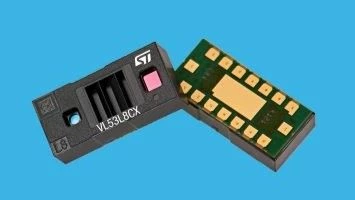
The latest-generation VL53L8CX 8×8 multizone Time-of-Flight ranging sensor delivers a range of improvements, including greater ambient-light immunity, lower power consumption, and enhanced optics.  ​ ST’s direct-ToF sensors combine a 940 nm vertical cavity surface emitting laser (VCSEL), a multizone SPAD (single-photon avalanche diode) detector array, and an optical system comprising filters and diffractive optical elements (DOE) in an all-in-one module that outperforms conventional micro lenses typically used with similar alternative sensors. The sensor projects a wide square field of view of 45° x 45° (65° diagonal) and receives reflected light to calculate the distance of objects up to 400 cm away, across 64 independent zones, and up to 30 captures per second. The new VL53L8CX boosts ranging performance with a new-generation VCSEL and advanced silicon-based meta-optics. Compared with the current VL53L5CX, the enhancements increase immunity to interference from ambient light, extending the sensor’s maximum range in daylight from 170 to 285 cm and reducing power consumption from 4.5mW to 1.6mW in low-power mode. By increasing performance, the new VL53L8CX now further extends the advantages of these sensors over alternatives with conventional optics, which have fewer native zones and lose sensitivity in the outer areas. Thanks to its true 8×8 multizone sensing, the VL53L8CX ensures uniform sensitivity and accurate ranging throughout the field of view, with superior range in ambient light. When used for system activation and human presence detection, the VL53L8CX’s greater ambient-light immunity enables equipment to respond more consistently and quickly. As part of ST’s STGesture™ platform that also includes the STSW-IMG035 turnkey gesture-recognition software and Gesture EVK development tool, the new sensor delivers the precision needed for repeatable gesture-based interaction. In addition to motion gesture recognition, hand posture recognition is also possible leveraging the latest AI models available in the STM32 AI model zoo on GitHub. In industrial applications, the VL53L8CX enhances accuracy for monitoring contents in bulk storage and warehousing, including liquid-level monitoring. It also improves the performance of beverage dispensers and coffee makers. Mobile robots, such as autonomous vacuum cleaners, benefit from the sensor's improved guidance capabilities for floor sensing, object detection, collision avoidance, and cliff detection. Also, the synchronization pin enables projectors and cameras to benefit from coordinated autofocus. There is also a motion indicator, an auto-stop feature that allows real-time actions, and the sensor is immune to cover-glass crosstalk beyond 60 cm. Now supporting SPI connectivity, in addition to the 1 MHz I2C interface, the new sensor handles host data transfers at up to 3 MHz. Developers can easily evaluate and integrate the VL53L8CX into their projects using the X-NUCLEO-53L8A1 expansion board, SATEL-VL53L8 breakout boards, and the P-NUCLEO-53L8A1 pack, which includes a microcontroller board. Additional resourcesVL53L8CX datasheet On-demand webinar: Enhance Time-of-Flight performance with new sensors based on the world’s first optical metasurface technologyFirst published on Dec 14, 2023 

Related products:Other hardware and tools
Low-offset, zero-drift op amps deliver wide gain-bandwidth for high-accuracy sensing

Low-offset, zero-drift op amps deliver wide gain-bandwidth for high-accuracy sensing

The TSZ151 op amps have very low offset voltage with minimal temperature drift, offering high accuracy and stability to circuits for sensor interfacing, signal conditioning, and current measurement. ​An extremely low input offset voltage (Vio) is the defining parameter of a high-accuracy operational amplifier (op amp). The TSZ151 has Vio less than 7 µV at 25°C. Moreover, the value remains stable, below 10 µV, over the full specified temperature range, from -40 to 125 °C. Its high stability minimizes reliance on periodic recalibration, enhancing availability of the end product throughout its lifetime. With gain-bandwidth of 1.6 MHz and drawing just 210 μA at 5 V, the TSZ151 sits between ST’s 400 kHz TSZ121 and 3MHz TSZ181, giving designers more choice and flexibility to optimize speed and power consumption. The TSZ151 combines its excellent speed-to-power ratio with ultra-low maximum input bias current of 300 pA. Having a minimum operating voltage of 1.8 V, the TSZ151 can be powered from the same rail as other ICs in the system, such as a low-voltage microcontroller. The rail-to-rail input and output help maximize dynamic range. The op amp also has very low power consumption, drawing just 210 μA at 5 V, while the low supply-voltage capability permits extended runtime with a discharged battery. Leveraging its wide operating temperature range, from -40 to +125°C, designers can use the TSZ151 in equipment to be deployed in harsh environments and in applications with long mission profiles. Typical uses include feedback circuitry in power supplies for industrial, server and telecom-infrastructure applications, and automotive high-accuracy signal conditioning and power conversion. The TSZ151 is AEC-Q100 qualified and is covered by ST’s rolling 10-year longevity plan that guarantees long-term product support. Currently in mass production, the TSZ151 is offered in compact SC70-5 and SOT23-5 packages. Additional resourceTSZ152 datasheet First published on Jan 29, 2024

Related products:Other hardware and tools
Simplified long-range IoT connectivity with LoRaWAN® sub-1GHz STM32 SiP module

Simplified long-range IoT connectivity with LoRaWAN® sub-1GHz STM32 SiP module

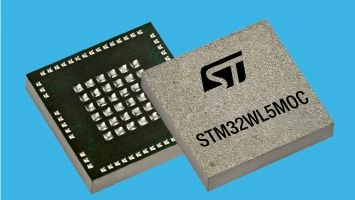
ST has launched a compact System-in-Package module for long-range connectivity, the pre-certified STM32WL5MOC, which is poised to accelerate the deployment of IoT devices in smart homes and buildings. This module is built around the dual-core STM32WL55JC wireless system-on-chip (SoC), designed to reduce material costs and boost time to market for remote metering, monitoring, and smart-sensing devices by enabling straightforward LPWAN wireless connectivity. Hosted in a 10 x 10 mm LGA92 package, the STM32WL5MOC SiP integrates the SoC with crucial RF components such as frequency-controlled oscillators, a balun, filter, matching network, a receive/transmit switch, and the passives required for operation. This integration allows users to bypass the complexities of RF design, saving space and simplifying circuit layout, which cuts down on the time and expertise needed for sophisticated RF design and certifications. The module excels in long-range data communication with minimal power usage, supporting battery lifetimes of over 10 years. It operates in the 864 to 928MHz band, which is license-free in many regions, and is pre-certified for LoRaWAN® and Sigfox networks. The STM32WL5MOC's wireless subsystem is versatile, supporting multiple modulation schemes, including (G)FSK, (G)MSK, BPSK, in addition to LoRa® and is compatible with various protocols, with RF output power adjustable to meet different regional regulations. The STM32WL55 SoC's dual-core architecture, with 256Kbytes of flash memory and 64Kbytes RAM, ensures real-time application performance. It features an Arm® Cortex®-M4 core and a Cortex-M0+ core with memory protection and secure services, enhancing device security. An STSAFE-A110 option is available for advanced data and network security. The STM32WL5MOC is integrated into the STM32 development ecosystem and STM32CubeMX tool for project setup and software development. Additionally, the B-WL5M-SUBG1 wireless prototyping board, which includes the STM32WL5MOC module, is available for immediate evaluation and software integration, complete with USB power and an antenna.  Additional resourcesSTM32WL5MOC datasheet The ST blog: STM32WL5M, the 1st LoRaWAN-certified ST module democratizes sub-GHz applications in a big way!First published on Jan 15, 2024

Related products:STM32 products and hardware tools