Indeed, my understanding is correct, syscfg_exti0_mux works exactly as what I expected.
1. The SYSCFG_EXTICRx registers provide 16 configuration 4-bit bitfields, each bitfield select a GPIO bank from A to K, the input pin must have the name number as the bitfield number. For example, bitfield 0 select the input GPIO bank of pin 0. This provides 16 multiplexed signal outputs EXTI[0:15].
2. Syscfg_extiX_mux is the raw output of EXTI[0:15]. Since only Syscfg_exti0_mux and Syscfg_exti2_mux are available as input, you can only use the signal EXTI[0] and EXTI[2], which correspond to GPIO[A:K] pin 0 and GPIO[A:K] pin 2. You cannot use other pins to trigger the DMA because of the lack of connections, but they don't need EXTI or NVIC.
Even better, because it's in the D3 domain, it keeps working autonomously even if the CPU core is halted in the debugger, or if the D1 domain is powered off completely. Unfortunately, only Pin 0 and Pin 2 of a GPIO bank can be used for that. For other pins you need to do it via a real peripheral.
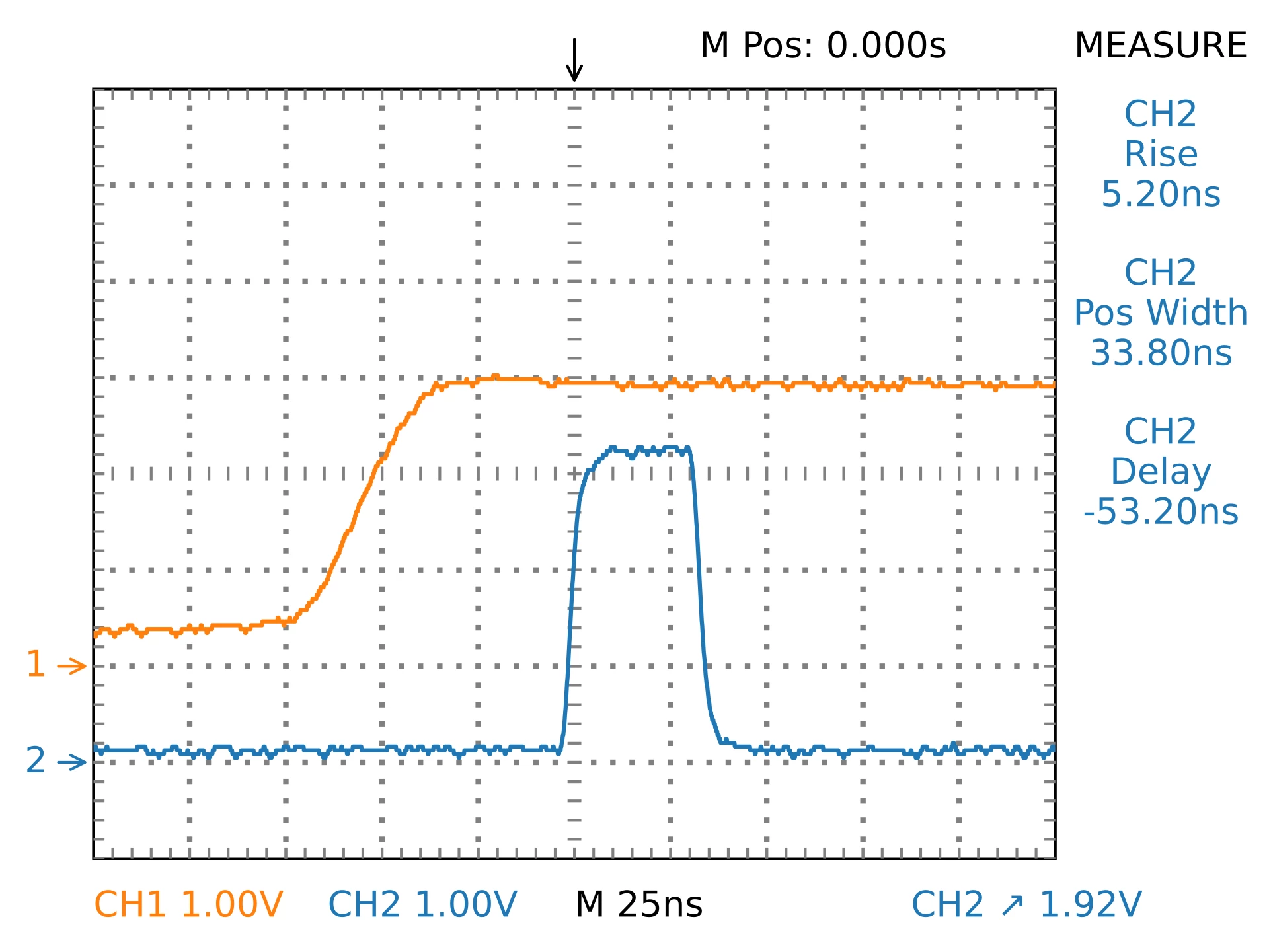
Using the following code:
static void bdma_config(void)
{
	/*
	 * Select GPIO bank B as the source of the EXTI input line 0.
	 * GPIOB Pin 0 would generate a signal on EXTI Line 0.
	 */
	LL_SYSCFG_SetEXTISource(LL_SYSCFG_EXTI_PORTB, LL_SYSCFG_EXTI_LINE0);

	LL_AHB4_GRP1_EnableClock(LL_AHB4_GRP1_PERIPH_BDMA);

	/* Use EXTI line 0's rising edge to generate DMA Request 0 */
	LL_DMAMUX_SetRequestSignalID(
		DMAMUX2, LL_DMAMUX_REQ_GEN_0, LL_DMAMUX2_REQ_GEN_EXTI0
	);
	LL_DMAMUX_SetRequestGenPolarity(
		DMAMUX2, LL_DMAMUX_REQ_GEN_0, LL_DMAMUX_REQ_GEN_POL_RISING
	);

	/* Trigger 2 DMA transfers per request */
	LL_DMAMUX_SetGenRequestNb(DMAMUX2, LL_DMAMUX_REQ_GEN_0, 2);
	LL_DMAMUX_EnableRequestGen(DMAMUX2, LL_DMAMUX_REQ_GEN_0);

	__attribute__((section (".sram4_data")))
	static const uint32_t gpio_data[] = { 0xFFFFFFFF, 0x00000000 };

	static LL_BDMA_InitTypeDef bdma_ctx = {
		.PeriphOrM2MSrcAddress = (uint32_t) &GPIOD->ODR,
		.MemoryOrM2MDstAddress = (uint32_t) &gpio_data,
		.Direction = LL_BDMA_DIRECTION_MEMORY_TO_PERIPH,
		/* auto-reload if NbData goes to 0, otherwise DMA stops */
		.Mode = LL_BDMA_MODE_CIRCULAR,
		.PeriphOrM2MSrcIncMode = LL_BDMA_PERIPH_NOINCREMENT,
		.MemoryOrM2MDstIncMode = LL_BDMA_MEMORY_INCREMENT,
		.PeriphOrM2MSrcDataSize = LL_BDMA_PDATAALIGN_WORD,
		.MemoryOrM2MDstDataSize = LL_BDMA_MDATAALIGN_WORD,
		.NbData = sizeof(gpio_data) / sizeof(gpio_data[0]),
		.PeriphRequest = LL_DMAMUX2_REQ_GENERATOR0,
		.Priority = LL_BDMA_PRIORITY_VERYHIGH,
		.DoubleBufferMode = LL_BDMA_DOUBLEBUFFER_MODE_DISABLE,
		/* don't care */
		.TargetMemInDoubleBufferMode = LL_BDMA_CURRENTTARGETMEM0,
	};

	LL_BDMA_Init(BDMA, LL_BDMA_CHANNEL_0, &bdma_ctx);
	LL_BDMA_EnableChannel(BDMA, LL_BDMA_CHANNEL_0);
}

static void mainloop(void)
{
	/*
	 * Set GPIO pin A9 as OUTPUT, this is connected to an LED on my devboard
	 * for indicating the firmware status. Can be removed.
	 */
	LL_GPIO_SetPinMode(GPIOA, LL_GPIO_PIN_9, LL_GPIO_MODE_OUTPUT);
	LL_GPIO_SetOutputPin(GPIOA, LL_GPIO_PIN_9);

	while (true) {
		__NOP();
	}
}
3. exti_exti0_it is the output of the EXTI interrupt controller, the same signal also goes to the CPU's NVIC. The same signal is connected to the DMAMUX controllers, which can use the interrupt's edge to initiate DMAs. But to use these signals to trigger DMA, EXTI's interrupt output to NVIC must also be enabled. This creates a problem: if you don't call LL_EXTI_ClearFlag, the EXTI's IRQ output line remains high, which means the DMA stops after the first rising edge.
So, after each DMA triggering, you either have to also enable an IRQ for the sole purpose of clearing this flag, or you have to clear the EXTI interrupt pending bit by polling, or by another DMA. This is why it's not recommended).
The following oscilloscope trace shows a working example:
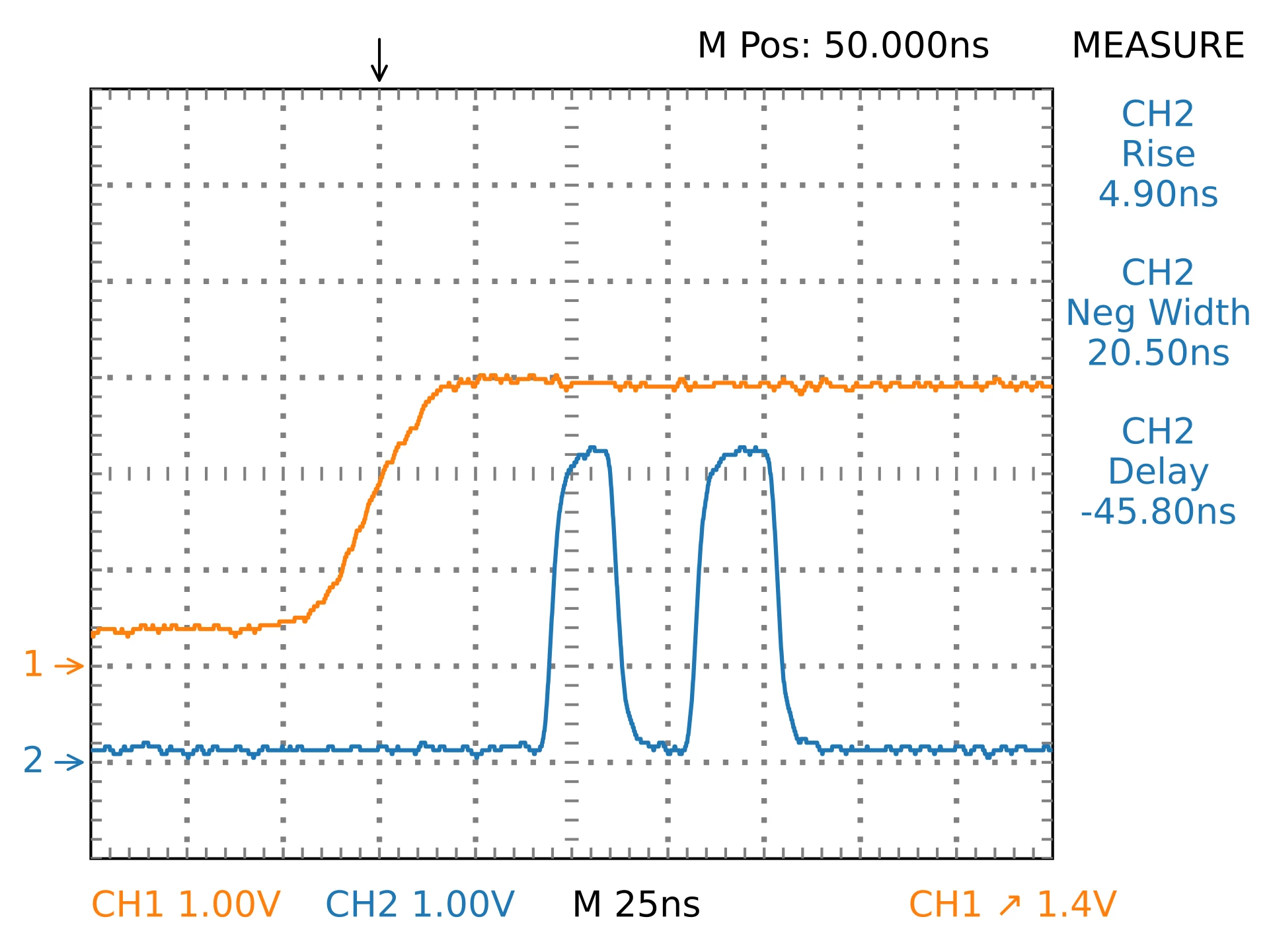
Using the following code:
static void dma_config(void)
{
	/*
	 * Select GPIO bank B as the source of the EXTI input line 0.
	 * GPIOB Pin 0 would generate a signal on EXTI Line 0.
	 */
	LL_SYSCFG_SetEXTISource(LL_SYSCFG_EXTI_PORTB, LL_SYSCFG_EXTI_LINE0);

	/* Use EXTI Line 0 input's rising edge to trigger an IRQ. */
	static LL_EXTI_InitTypeDef exti_ctx = {
		.Line_0_31 = LL_EXTI_LINE_0,
		.Line_32_63 = LL_EXTI_LINE_NONE,
		.Line_64_95 = LL_EXTI_LINE_NONE,
		.LineCommand = ENABLE,
		.Mode = LL_EXTI_MODE_IT,
		.Trigger = LL_EXTI_TRIGGER_RISING,
	};
	LL_EXTI_Init(&exti_ctx);

	LL_AHB1_GRP1_EnableClock(LL_AHB1_GRP1_PERIPH_DMA1);

	/* Use EXTI line 0's rising edge to generate DMA Request 0 */
	LL_DMAMUX_SetRequestSignalID(
		DMAMUX1, LL_DMAMUX_REQ_GEN_0, LL_DMAMUX1_REQ_GEN_EXTI0
	);
	LL_DMAMUX_SetRequestGenPolarity(
		DMAMUX1, LL_DMAMUX_REQ_GEN_0, LL_DMAMUX_REQ_GEN_POL_RISING
	);

	/* Trigger 4 DMA transfers per request */
	LL_DMAMUX_SetGenRequestNb(DMAMUX1, LL_DMAMUX_REQ_GEN_0, 4);
	LL_DMAMUX_EnableRequestGen(DMAMUX1, LL_DMAMUX_REQ_GEN_0);

	__attribute__((section (".sram1_data")))
	static const uint32_t gpio_data[] = {
		0xFFFFFFFF, 0x00000000, 0xFFFFFFFF, 0x00000000
	};

	static LL_DMA_InitTypeDef dma_ctx = {
		.PeriphOrM2MSrcAddress = (uint32_t) &GPIOD->ODR,
		.MemoryOrM2MDstAddress = (uint32_t) &gpio_data,
		.Direction = LL_DMA_DIRECTION_MEMORY_TO_PERIPH,
		.Mode = LL_DMA_MODE_CIRCULAR,
		.PeriphOrM2MSrcIncMode = LL_DMA_PERIPH_NOINCREMENT,
		.MemoryOrM2MDstIncMode = LL_DMA_MEMORY_INCREMENT,
		.PeriphOrM2MSrcDataSize = LL_DMA_PDATAALIGN_WORD,
		.MemoryOrM2MDstDataSize = LL_DMA_MDATAALIGN_WORD,
		.NbData = sizeof(gpio_data) / sizeof(gpio_data[0]),
		.PeriphRequest = LL_DMAMUX1_REQ_GENERATOR0,
		.Priority = LL_DMA_PRIORITY_VERYHIGH,
		.FIFOMode = LL_DMA_FIFOMODE_ENABLE,
		.FIFOThreshold = LL_DMA_FIFOTHRESHOLD_FULL,
		.MemBurst = LL_DMA_MBURST_INC4,
		.PeriphBurst = LL_DMA_PBURST_SINGLE,
		.DoubleBufferMode = LL_DMA_DOUBLEBUFFER_MODE_DISABLE,
		/* don't care */
		.TargetMemInDoubleBufferMode = LL_DMA_CURRENTTARGETMEM0,
	};

	LL_DMA_Init(DMA1, LL_DMA_STREAM_0, &dma_ctx);
	LL_DMA_EnableStream(DMA1, LL_DMA_STREAM_0);
}

/*
 * Use "noinline" to prevent this function from being inlined to main(),
 * which is in Flash.
 */
__attribute__((section (".itcm_text"), noinline))
static void mainloop(void)
{
	/*
	 * Set GPIO pin A9 as OUTPUT, this is connected to an LED on my devboard
	 * for indicating the firmware status. Can be removed.
	 */
	LL_GPIO_SetPinMode(GPIOA, LL_GPIO_PIN_9, LL_GPIO_MODE_OUTPUT);
	LL_GPIO_SetOutputPin(GPIOA, LL_GPIO_PIN_9);

	/*
	 * Because DMAMUX is edge-triggered by EXTI's IRQ output, not input, we
	 * must clear the EXTI flag LL_EXTI_ClearFlag_0_31(LL_EXTI_LINE_0); after
	 * every IRQ, otherwise the output flatlines and DMA stops. This can be
	 * done in a real ISR by enabling the IRQ.
	 *
 * NVIC_SetPriority(EXTI0_IRQn, 0);
 * NVIC_EnableIRQ(EXTI0_IRQn);
	 *
	 * Because we don't want the actual IRQ, NVIC is not enabled on this
	 * signal. But we still need to simulate the IRQ flag clearing
	 * by polling (or potentially another DMA transaction). This convoluted
	 * procedure is the reason that GPIO DMA triggering via EXTI is not
	 * recommended. Use another peripheral such as a timer if possible.
	 */
	while (true) {
		/*
		 * Use WFI, not polling, because polling itself consumes bus
		 * bandwidth, which makes DMA transfer themselves if we're still
		 * polling during the DMA. If you must use polling, it's better
		 * to pull the NVIC, not the EXTI.
		 *
		 * NVIC_GetPendingIRQ(EXTI0_IRQn)
		 *
		 * // after LL_EXTI_ClearFlag_0_31 + 20 _NOP()
		 * NVIC_ClearPendingIRQ(EXTI0_IRQn)
		 */
		__WFI();

		/* Clear IRQ flags immediately, otherwise DMA stops. */
		LL_EXTI_ClearFlag_0_31(LL_EXTI_LINE_0);

		/*
		 * The STM32H7 has a notorious "spurious IRQ" limitation because
		 * LL_*_ClearFlag() must travel across multiple buses and buffers
		 * with a long delay, causing the IRQ to retrigger. It can be worked
		 * around by clearing the IRQ flag early and relying on the natural
		 * ISR code delay. Adjust this delay if the CPU clock frequency or
		 * emulator performance changes. Always verify with an oscilloscope.
		 *
		 * http://efton.sk/STM32/gotcha/g7.html
		 *
		 */
		for (uint8_t i = 0; i < 20; i++) {
			__NOP();
		}
	}
}
Why should you use DMA1/DMA2 instead of BDMA? The D2 domain can access any memory, the D3 domain can only access SRAM4. Furthermore, the D2 domain's SRAM1 and DMA1 are faster than D3 domain's SRAM4 and BDMA (even though D2 still needs to access D3's GPIO controller). I'm not sure about the exact timing, but from the examples above, BDMA generates a GPIO pulse of 33 ns, but DMA1 generates a GPIO pulse of only 20 ns.
Furthermore, DMA1/DMA2 has a FIFO, which means the DMA doesn't need to access memory for every transfer, it can preload data and write that the destination in a burst. In this process, the DMA also uses the burst transfer type in the AHB protocol, reducing the latency between consecutive words.
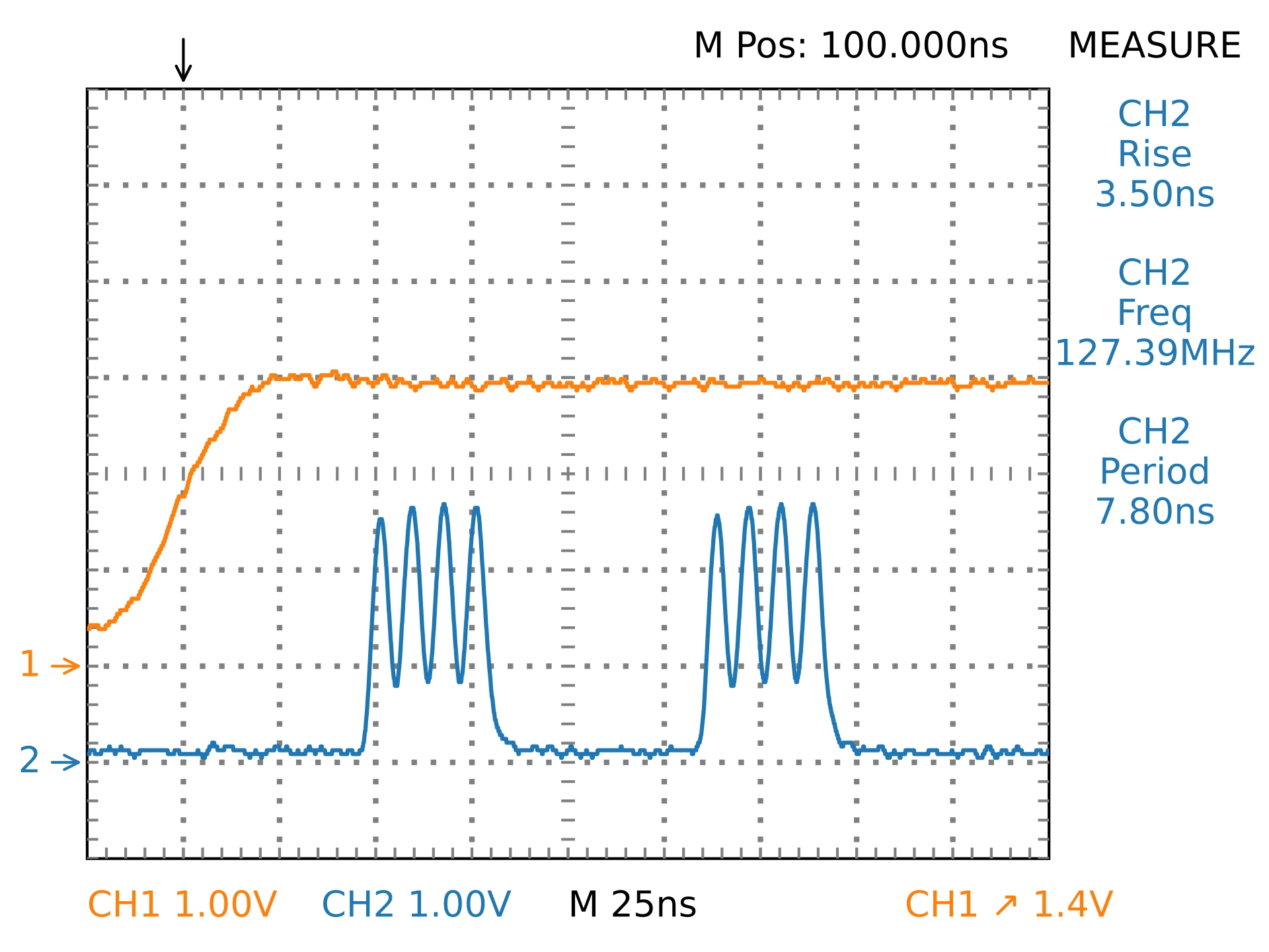
Here's an example of bitbanging GPIO via DMA1 using 8 16-bit burst, generating 8 transitions with a period of 7.8 ns, which is a frequency greater than 120 MHz! I think this is likely the fastest way to bitbang the GPIO on the STM32H7.
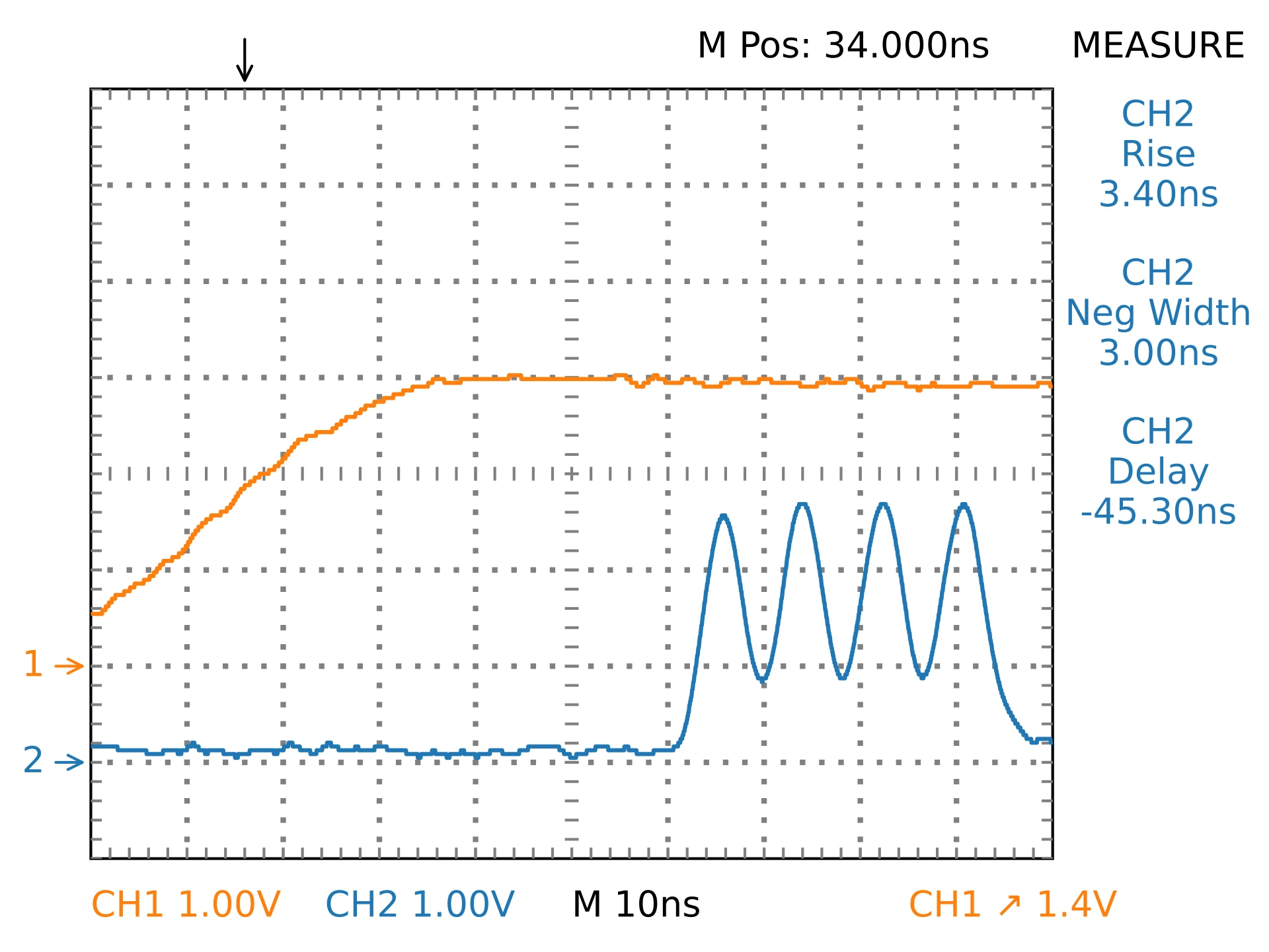
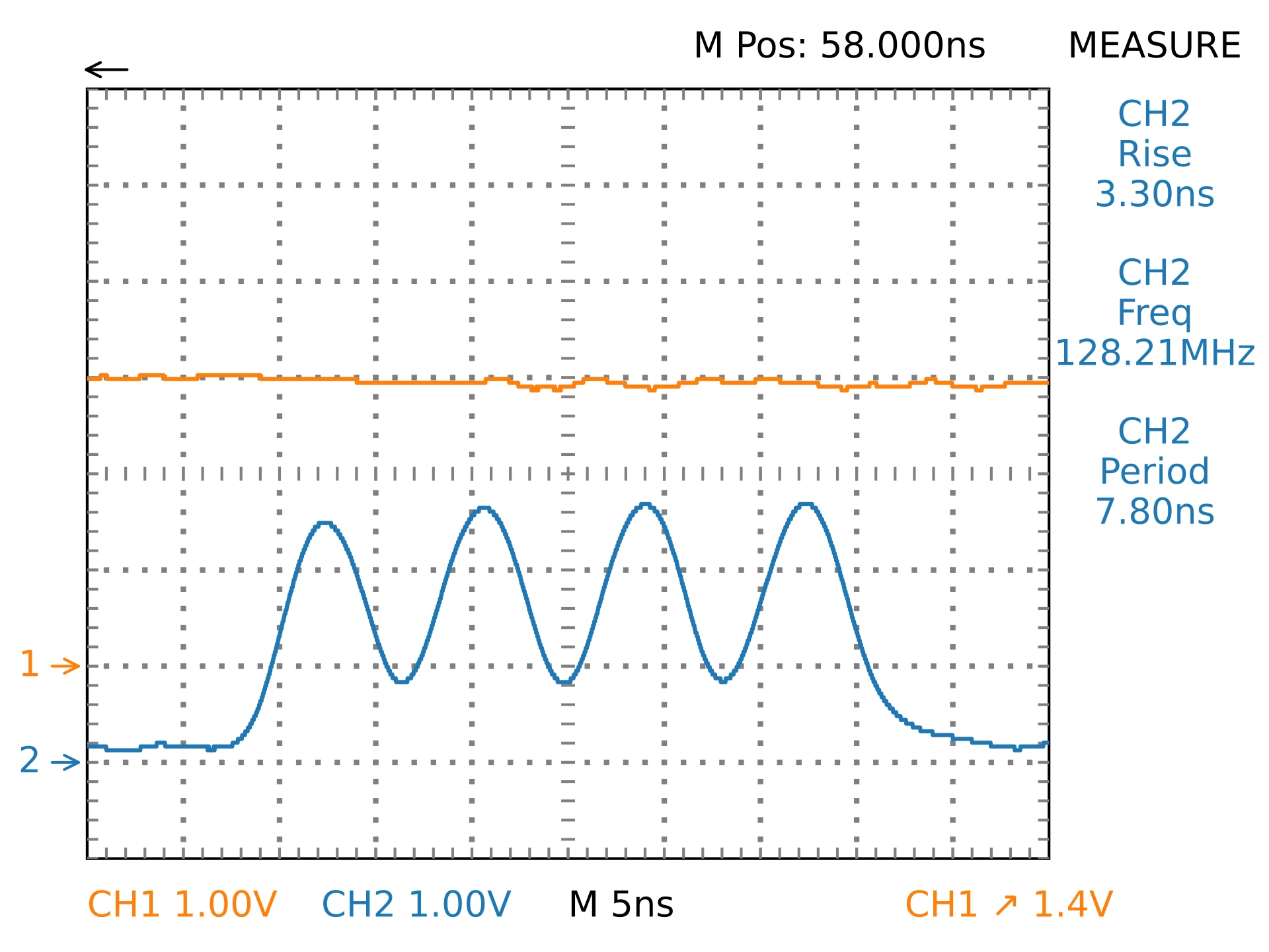
The number of pulses in the pulse train is limited to 4, 8, or 16. Note that time is needed to reload the DMA after each burst, the reloading time depends on the burst settings. In this example, it's 50 ns.
static void dma_config(void)
{
	/*
	 * Select GPIO bank B as the source of the EXTI input line 0.
	 * GPIOB Pin 0 would generate a signal on EXTI Line 0.
	 */
	LL_SYSCFG_SetEXTISource(LL_SYSCFG_EXTI_PORTB, LL_SYSCFG_EXTI_LINE0);

	/* Use EXTI Line 0 input's rising edge to trigger an IRQ. */
	static LL_EXTI_InitTypeDef exti_ctx = {
		.Line_0_31 = LL_EXTI_LINE_0,
		.Line_32_63 = LL_EXTI_LINE_NONE,
		.Line_64_95 = LL_EXTI_LINE_NONE,
		.LineCommand = ENABLE,
		.Mode = LL_EXTI_MODE_IT,
		.Trigger = LL_EXTI_TRIGGER_RISING,
	};
	LL_EXTI_Init(&exti_ctx);

	LL_AHB1_GRP1_EnableClock(LL_AHB1_GRP1_PERIPH_DMA1);

	/* Use EXTI line 0's rising edge to generate DMA Request 0 */
	LL_DMAMUX_SetRequestSignalID(
		DMAMUX1, LL_DMAMUX_REQ_GEN_0, LL_DMAMUX1_REQ_GEN_EXTI0
	);
	LL_DMAMUX_SetRequestGenPolarity(
		DMAMUX1, LL_DMAMUX_REQ_GEN_0, LL_DMAMUX_REQ_GEN_POL_RISING
	);
	LL_DMAMUX_SetGenRequestNb(DMAMUX1, LL_DMAMUX_REQ_GEN_0, 2);
	LL_DMAMUX_EnableRequestGen(DMAMUX1, LL_DMAMUX_REQ_GEN_0);

	__attribute__((section (".sram1_data")))
	static const uint16_t gpio_data[] = {
		0xFFFF, 0x0000, 0xFFFF, 0x0000,
		0xFFFF, 0x0000, 0xFFFF, 0x0000,
		0xFFFF, 0x0000, 0xFFFF, 0x0000,
		0xFFFF, 0x0000, 0xFFFF, 0x0000,
	};

	static LL_DMA_InitTypeDef dma_ctx = {
		.PeriphOrM2MSrcAddress = (uint32_t) &GPIOD->ODR,
		.MemoryOrM2MDstAddress = (uint32_t) &gpio_data,
		.Direction = LL_DMA_DIRECTION_MEMORY_TO_PERIPH,
		.Mode = LL_DMA_MODE_CIRCULAR,
		.PeriphOrM2MSrcIncMode = LL_DMA_PERIPH_NOINCREMENT,
		.MemoryOrM2MDstIncMode = LL_DMA_MEMORY_INCREMENT,
		.PeriphOrM2MSrcDataSize = LL_DMA_PDATAALIGN_HALFWORD,
		.MemoryOrM2MDstDataSize = LL_DMA_MDATAALIGN_HALFWORD,
		.NbData = sizeof(gpio_data) / sizeof(gpio_data[0]),
		.PeriphRequest = LL_DMAMUX1_REQ_GENERATOR0,
		.Priority = LL_DMA_PRIORITY_VERYHIGH,
		.FIFOMode = LL_DMA_FIFOMODE_ENABLE,
		.FIFOThreshold = LL_DMA_FIFOTHRESHOLD_FULL,
		.MemBurst = LL_DMA_MBURST_INC8,
		.PeriphBurst = LL_DMA_PBURST_INC8,
		.DoubleBufferMode = LL_DMA_DOUBLEBUFFER_MODE_DISABLE,
		/* don't care */
		.TargetMemInDoubleBufferMode = LL_DMA_CURRENTTARGETMEM0,
	};

	LL_DMA_Init(DMA1, LL_DMA_STREAM_0, &dma_ctx);
	LL_DMA_EnableStream(DMA1, LL_DMA_STREAM_0);
}
Just make sure gpio_data is located in SRAM 1 (0x30000000) for DMA1, or SRAM 4 (0x38000000) for BDMA, may require custom startup and linker code. How to implement this is out of scope of this thread. I'm using a bare-metal environment, your mileage may vary.
What I do at startup:
void flash_to_mem(
	char *flash_start,
	volatile char *mem_start,
	volatile char *mem_end
)
{
	size_t len = mem_end - mem_start;

#ifdef SEMIHOSTING
	printf(
		"relocate %p-%p to %p, %d bytes\n",
		flash_start,
		flash_start + len,
		mem_start,
		len
	);
#endif

	/*
	 * Language Lawyering.
	 *
	 * Don't use memcpy(). This is widely used in embedded libraries, but it's
	 * a theoretical Undefined Behavior as C compilers can remove memcpy()
	 * when they don't have any visible effects to C code under the "as-if"
	 * rule. Mark destination variables as "volatile char *", and copy manual-
	 * ly. Keyword "volatile" ensures it's always executed, and "char *" is
	 * the only data type in C that is safe to cast into without breaking
	 * aliasing or alignment rules (even "uint8_t *" does not enjoy this
	 * exception).
	 */
	for (size_t i = 0; i < len; i++) {
		mem_start[i] = flash_start[i];
	}
}

void relocate_to_itcm(void)
{
	extern char _si_isr_vector;
	extern volatile char __isr_vector_start, __isr_vector_end;
	flash_to_mem(&_si_isr_vector, &__isr_vector_start, &__isr_vector_end);

	extern char _si_itcm_text;
	extern volatile char __itcm_text_start, __itcm_text_end;
	flash_to_mem(&_si_itcm_text, &__itcm_text_start, &__itcm_text_end);

	SCB->VTOR = D1_ITCMRAM_BASE;

	/*
	 * Test memory access latency by declaring arrays with:
	 *
	 * __attribute__((section (".axisram_data")))
	 * __attribute__((section (".sram1_data")))
	 * __attribute__((section (".sram2_data")))
	 * __attribute__((section (".sram3_data")))
	 * __attribute__((section (".sram4_data")))
	 *
	 * Note that different SRAMs have different access latency due
	 * to their bus locations. Some peripherals can only read from
	 * a specific SRAM bank (e.g. BDMA can only read from SRAM4).
	 *
	 * Not used in this example, can be removed.
	 */
	extern char _si_axisram_data;
	extern volatile char __axisram_data_start, __axisram_data_end;
	LL_AHB3_GRP1_EnableClock(LL_AHB3_GRP1_PERIPH_AXISRAM);
	flash_to_mem(
		&_si_axisram_data, &__axisram_data_start, &__axisram_data_end
	);

	extern char _si_sram1_data;
	extern volatile char __sram1_data_start, __sram1_data_end;
	LL_AHB2_GRP1_EnableClock(LL_AHB2_GRP1_PERIPH_D2SRAM1);
	flash_to_mem(&_si_sram1_data, &__sram1_data_start, &__sram1_data_end);

	extern char _si_sram2_data;
	extern volatile char __sram2_data_start, __sram2_data_end;
	LL_AHB2_GRP1_EnableClock(LL_AHB2_GRP1_PERIPH_D2SRAM2);
	flash_to_mem(&_si_sram2_data, &__sram2_data_start, &__sram2_data_end);

	extern char _si_sram3_data;
	extern volatile char __sram3_data_start, __sram3_data_end;
	LL_AHB2_GRP1_EnableClock(LL_AHB2_GRP1_PERIPH_D2SRAM3);
	flash_to_mem(&_si_sram3_data, &__sram3_data_start, &__sram3_data_end);

	extern char _si_sram4_data;
	extern volatile char __sram4_data_start, __sram4_data_end;
	LL_AHB4_GRP1_EnableClock(LL_AHB4_GRP1_PERIPH_SRAM4);
	flash_to_mem(&_si_sram4_data, &__sram4_data_start, &__sram4_data_end);
}
Using the following linker file:
/* SPDX-License-Identifier: Apache-2.0 AND (0BSD OR CC0-1.0) */
/*
******************************************************************************
**

** File : LinkerScript.ld
**
**
** Abstract : Linker script for STM32H7 series
** 2048Kbytes FLASH, 64Kbytes ITCMRAM, 128Kbytes DTCMRAM
**
** Set heap size, stack size and stack location according
** to application requirements.
**
** Set memory bank area and size if external memory is used.
**
** Target : STMicroelectronics STM32
**
** Distribution: The file is distributed as is without any warranty
** of any kind.
**
*****************************************************************************
** @attention
**
** Copyright (C) 2026 niconiconi.
**
** Modified from stm32h745xx_flash_CM7.ld to stm32h743xx_flash_CM7.ld,
** for STM32H7 support, including project-specific ITCM/DTCM customizations.
**
** This file is free software: you may copy, redistribute and/or modify it
** under the terms of the BSD Zero Clause License, or (at your option)
** Creative Commons Zero v1.0 Universal license. See "SPDX-License-Identifier"
** for more details.
**
** This file is distributed in the hope that it will be useful, but WITHOUT ANY
** WARRANTY; without even the implied warranty of MERCHANTABILITY or FITNESS
** FOR A PARTICULAR PURPOSE.
**
** This file incorporates work covered by the following copyright and
** permission notice:
**
** Copyright (c) 2019 STMicroelectronics.
** All rights reserved.
**
** This software is licensed under terms that can be found in the LICENSE
** file in the root directory of this software component. If no LICENSE
** file comes with this software, it is provided AS-IS.
**
** LICENSE file in the root directory of the origin:
**
** Component: CMSIS Device
** Copyright: ARM Limited, STMicroelectronics
** License: Apache License 2.0
**
******************************************************************************
*/

/* Entry Point */
ENTRY(Reset_Handler)

/* Highest address of the user mode stack */
_estack = 0x20020000; /* end of RAM */
/* Generate a link error if heap and stack don't fit into RAM */
_Min_Heap_Size = 0x200; /* required amount of heap */
_Min_Stack_Size = 0x400; /* required amount of stack */

/* Specify the memory areas */
MEMORY
{
FLASH (rx)	: ORIGIN = 0x08000000, LENGTH = 2048K
ITCMRAM (xrw)	: ORIGIN = 0x00000000, LENGTH = 64K
DTCMRAM (xrw)	: ORIGIN = 0x20000000, LENGTH = 128K
AXISRAM (rw) : ORIGIN = 0x24000000, LENGTH = 512K
SRAM1 (rw) : ORIGIN = 0x30000000, LENGTH = 128K
SRAM2 (rw) : ORIGIN = 0x30020000, LENGTH = 128K
SRAM3 (rw) : ORIGIN = 0x30040000, LENGTH = 32K
SRAM4 (rw) : ORIGIN = 0x38000000, LENGTH = 64K
}

/* Define output sections */
SECTIONS
{
 /* The startup code goes into ITCM (relocated from FLASH) */
 .isr_vector :
 {
 . = ALIGN(4);
 __isr_vector_start = .;
 KEEP(*(.isr_vector)) /* Startup code */
 . = ALIGN(4);
 __isr_vector_end = .;
 } >ITCMRAM AT> FLASH

 .itcm_text :
 {
 . = ALIGN(4);
 __itcm_text_start = .;
 *(.itcm_text)
 *(.itcm_text*)
 . = ALIGN(4);
 __itcm_text_end = .;
 } > ITCMRAM AT> FLASH

 /* used by the startup to initialize data */
 _si_isr_vector = LOADADDR(.isr_vector);
 _si_itcm_text = LOADADDR(".itcm_text");

 /* The program code and other data goes into FLASH */
 .text :
 {
 . = ALIGN(4);
 *(.text) /* .text sections (code) */
 *(.text*) /* .text* sections (code) */
 *(.glue_7) /* glue arm to thumb code */
 *(.glue_7t) /* glue thumb to arm code */
 *(.eh_frame)

 KEEP (*(.init))
 KEEP (*(.fini))

 . = ALIGN(4);
 _etext = .; /* define a global symbols at end of code */
 } >FLASH

 /* Constant data goes into FLASH */
 .rodata :
 {
 . = ALIGN(4);
 *(.rodata) /* .rodata sections (constants, strings, etc.) */
 *(.rodata*) /* .rodata* sections (constants, strings, etc.) */
 . = ALIGN(4);
 } >FLASH

 .ARM.extab (READONLY) : /* The READONLY keyword is only supported in GCC11 and later, remove it if using GCC10 or earlier. */
 {
 . = ALIGN(4);
 *(.ARM.extab* .gnu.linkonce.armextab.*)
 . = ALIGN(4);
 } >FLASH
 .ARM (READONLY) : /* The READONLY keyword is only supported in GCC11 and later, remove it if using GCC10 or earlier. */
 {
 . = ALIGN(4);
 __exidx_start = .;
 *(.ARM.exidx*)
 __exidx_end = .;
 . = ALIGN(4);
 } >FLASH

 .preinit_array (READONLY) : /* The READONLY keyword is only supported in GCC11 and later, remove it if using GCC10 or earlier. */
 {
 . = ALIGN(4);
 PROVIDE_HIDDEN (__preinit_array_start = .);
 KEEP (*(.preinit_array*))
 PROVIDE_HIDDEN (__preinit_array_end = .);
 . = ALIGN(4);
 } >FLASH
 .init_array (READONLY) : /* The READONLY keyword is only supported in GCC11 and later, remove it if using GCC10 or earlier. */
 {
 . = ALIGN(4);
 PROVIDE_HIDDEN (__init_array_start = .);
 KEEP (*(SORT(.init_array.*)))
 KEEP (*(.init_array*))
 PROVIDE_HIDDEN (__init_array_end = .);
 . = ALIGN(4);
 } >FLASH
 .fini_array (READONLY) : /* The READONLY keyword is only supported in GCC11 and later, remove it if using GCC10 or earlier. */
 {
 . = ALIGN(4);
 PROVIDE_HIDDEN (__fini_array_start = .);
 KEEP (*(SORT(.fini_array.*)))
 KEEP (*(.fini_array*))
 PROVIDE_HIDDEN (__fini_array_end = .);
 . = ALIGN(4);
 } >FLASH

 /* used by the startup to initialize data */
 _sidata = LOADADDR(.data);
 _si_sram1_data = LOADADDR(.sram1_data);
 _si_sram2_data = LOADADDR(.sram2_data);
 _si_sram3_data = LOADADDR(.sram3_data);
 _si_sram4_data = LOADADDR(.sram4_data);
 _si_axisram_data = LOADADDR(.axisram_data);

 /* Initialized data sections goes into RAM, load LMA copy after code */
 .data :
 {
 . = ALIGN(4);
 _sdata = .; /* create a global symbol at data start */
 *(.data) /* .data sections */
 *(.data*) /* .data* sections */

 . = ALIGN(4);
 _edata = .; /* define a global symbol at data end */
 } >DTCMRAM AT> FLASH

 .axisram_data :
 {
 . = ALIGN(4);
 __axisram_data_start = .;
 *(.axisram_data)
 *(.axisram_data*)
 . = ALIGN(4);
 __axisram_data_end = .;
 } >AXISRAM AT> FLASH

 .sram1_data :
 {
 . = ALIGN(4);
 __sram1_data_start = .;
 *(.sram1_data)
 *(.sram1_data*)
 . = ALIGN(4);
 __sram1_data_end = .;
 } >SRAM1 AT> FLASH

 .sram2_data :
 {
 . = ALIGN(4);
 __sram2_data_start = .;
 *(.sram2_data)
 *(.sram2_data*)
 . = ALIGN(4);
 __sram2_data_end = .;
 } >SRAM2 AT> FLASH

 .sram3_data :
 {
 . = ALIGN(4);
 __sram3_data_start = .;
 *(.sram3_data)
 *(.sram3_data*)
 . = ALIGN(4);
 __sram3_data_end = .;
 } >SRAM3 AT> FLASH

 .sram4_data :
 {
 . = ALIGN(4);
 __sram4_data_start = .;
 *(.sram4_data)
 *(.sram4_data*)
 . = ALIGN(4);
 __sram4_data_end = .;
 } >SRAM4 AT> FLASH

 /* Uninitialized data section */
 . = ALIGN(4);
 .bss :
 {
 /* This is used by the startup in order to initialize the .bss section */
 _sbss = .; /* define a global symbol at bss start */
 __bss_start__ = _sbss;
 *(.bss)
 *(.bss*)
 *(COMMON)

 . = ALIGN(4);
 _ebss = .; /* define a global symbol at bss end */
 __bss_end__ = _ebss;
 } >DTCMRAM

 /* User_heap_stack section, used to check that there is enough RAM left */
 ._user_heap_stack :
 {
 . = ALIGN(8);
 PROVIDE ( end = . );
 PROVIDE ( _end = . );
 . = . + _Min_Heap_Size;
 . = . + _Min_Stack_Size;
 . = ALIGN(8);
 } >DTCMRAM


 /* Remove information from the standard libraries */
 /DISCARD/ :
 {
 libc.a ( * )
 libm.a ( * )
 libgcc.a ( * )
 }

 .ARM.attributes 0 : { *(.ARM.attributes) }
}