
MBeld.1
Associate
September 21, 2020
Solved

AN5129 antenna. Differences between application note and Nucleo implementation

  • September 21, 2020
  • 6 replies
  • 3102 views

Hi.

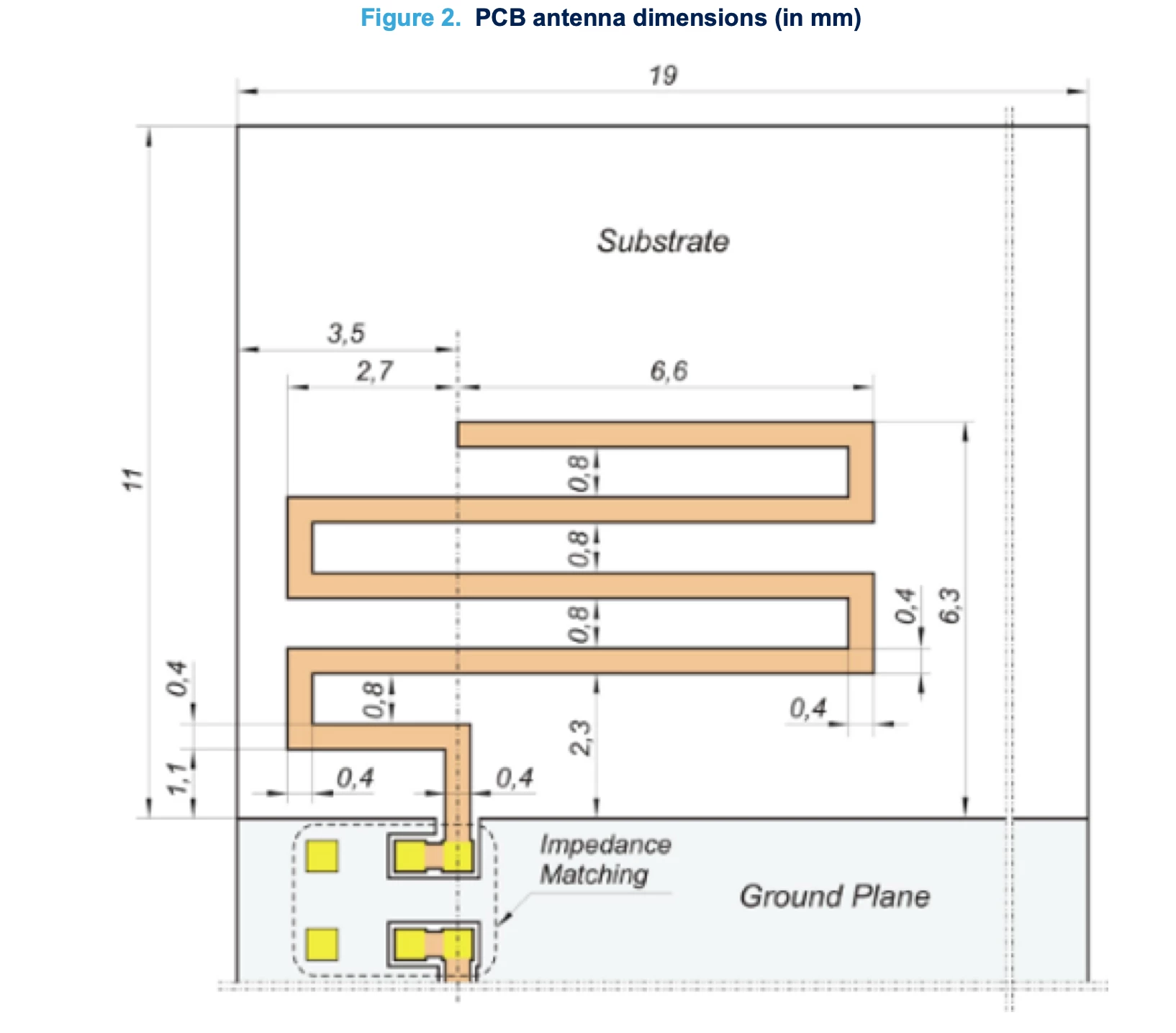
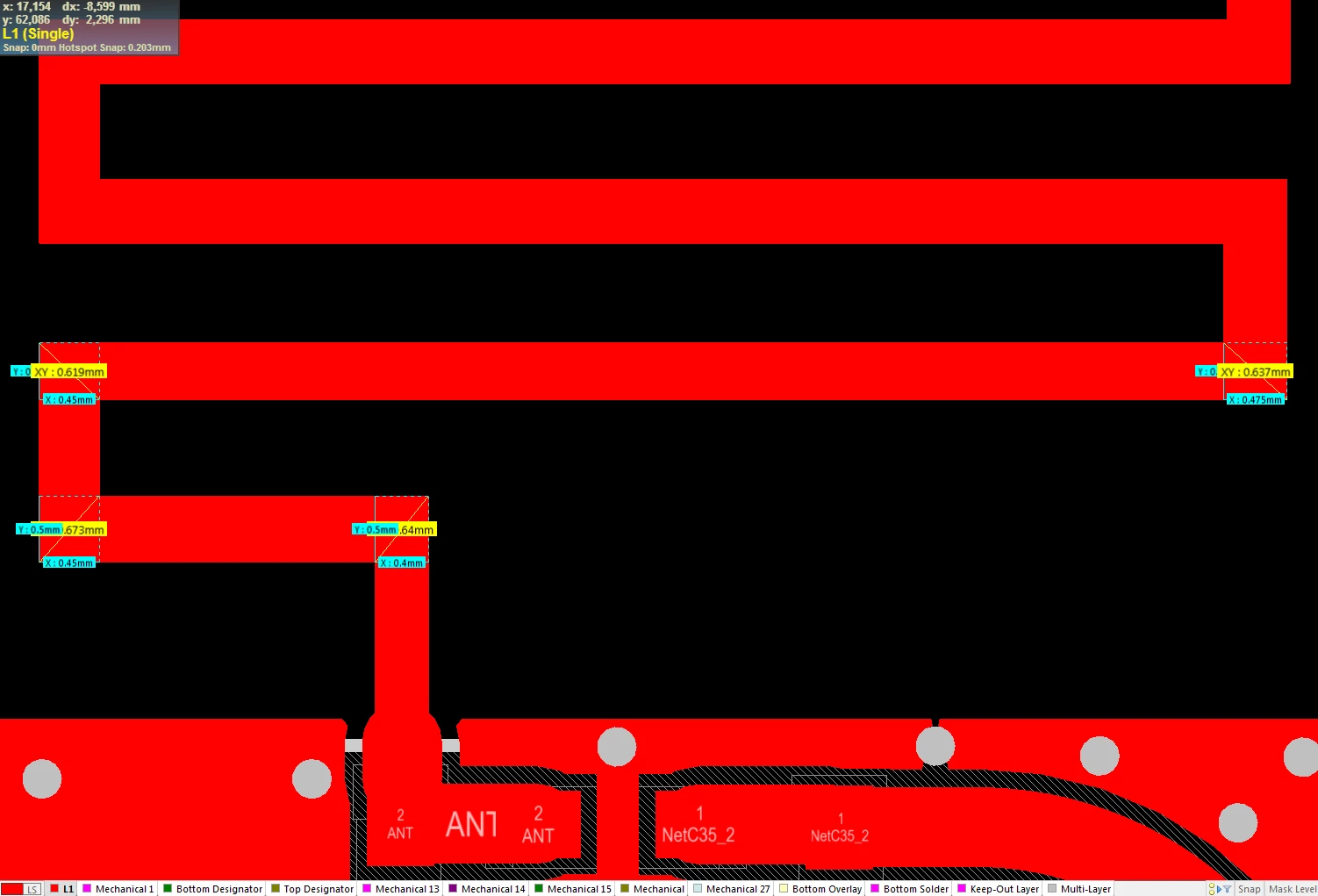
I'm wondering about discrepancies in antenna dimensions between AN5129 application note and the actual board - Nucleo MB1335. As you can see the differences are subtle but visible. I'm mostly curious about why the antenna width varies? Widths at different spots I was able to measure: 0.4mm, 0.425mm, 0.45mm, 0.475mm, 0.5mm.

Also, the gap between parallel arms varies between 0.725mm and 0.75mm, which is different than 0.8 specified in the app note.

Is there a reason for that or is it simply a mistake while doing a layout? I can see that the antenna wasn't defined as library component but rather drew as a polygon.
0693W000004GZNIQA4.png0693W000004GZQ2QAO.png

This topic has been closed for replies.
Best answer by Remi QUINTIN

Just got the answer. In fact, this layout came from a previous design for which the antenna was fully validated for BLE communication. Some marginal adaptations were made after further tests on the first proto boards as it is hard to determine the exact parameters of the PCB.

Note that the width of the antenna has an impact on the impedance, radiation and bandwidth too. hence the differences you can see in between the theorical design in AN5129 and the effective design resulting from real tests.

6 replies

Remi QUINTIN
Technical Moderator
September 21, 2020

These variations results from the board manufacturing.

What is key is the length of the antenna which should be a multiple of the wavelength/4.

MBeld.1
MBeld.1Author
Associate
September 21, 2020

I didn't measure the actual board. The differences are on the design files, based on which the board is later manufactured.

Remi QUINTIN
Technical Moderator
September 21, 2020

​OK I understand. No idea for now. i will check with the board designer.

MBeld.1
MBeld.1Author
Associate
September 22, 2020

Thank you, appreciate it.

Remi QUINTIN
Technical Moderator
September 22, 2020

Just got the answer. In fact, this layout came from a previous design for which the antenna was fully validated for BLE communication. Some marginal adaptations were made after further tests on the first proto boards as it is hard to determine the exact parameters of the PCB.

Note that the width of the antenna has an impact on the impedance, radiation and bandwidth too. hence the differences you can see in between the theorical design in AN5129 and the effective design resulting from real tests.

Remi QUINTIN
Technical Moderator
September 22, 2020

Note that the matching network is also a key element of the RF path to get an effective and performant antenna.